
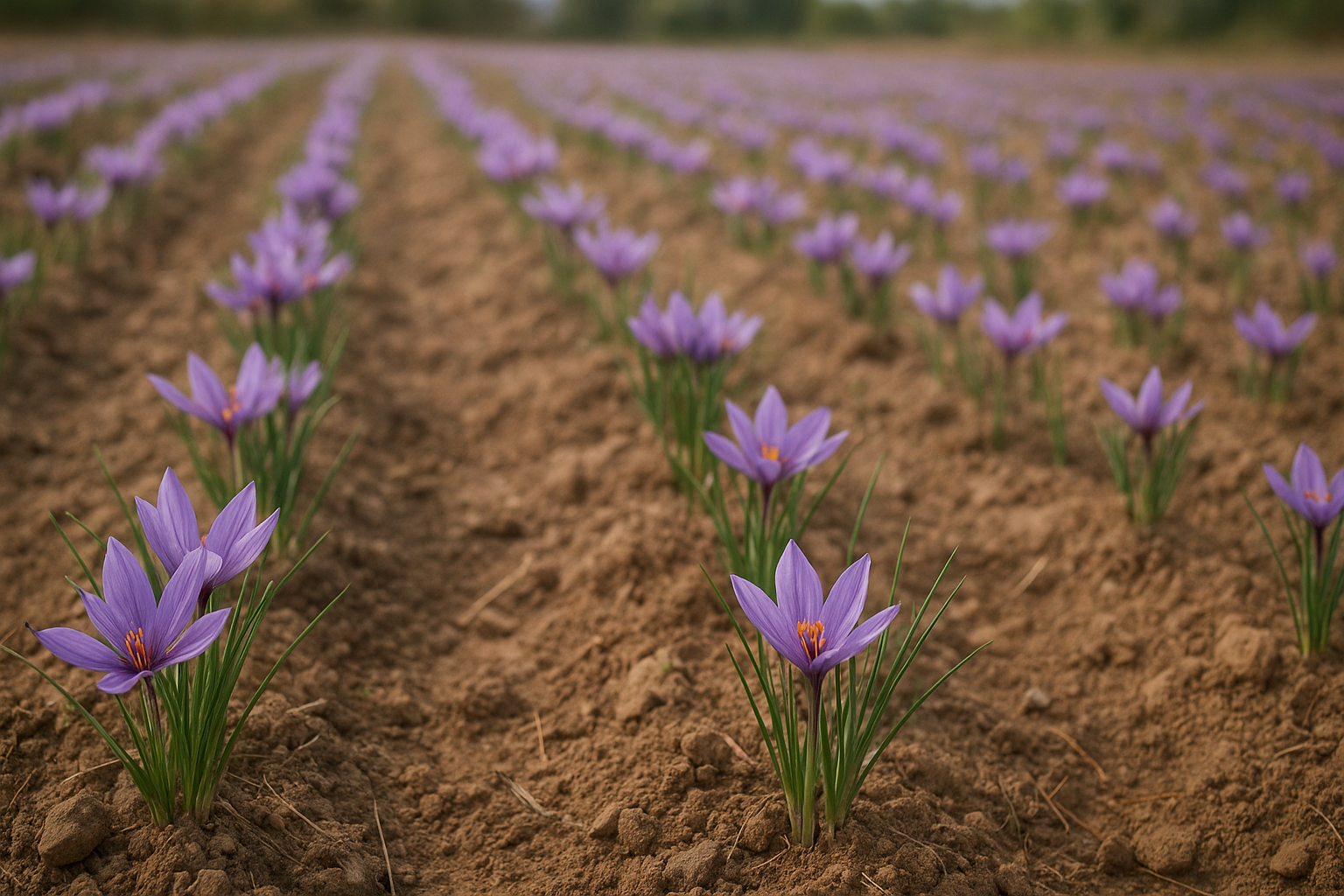
Saffron Cultivation — Modern Methods, Media, and Yield Optimization
Introduction
Saffron, derived from Crocus sativus, is one of the most valuable spices in the world — used for flavor, color, medicine, and perfume. Because the demand is increasing and natural conditions (soil, climate, water) are sometimes insufficient, researchers are exploring improved cultivation methods to boost yield, quality, and sustainability.
Cultivation Media and Growth Conditions
-
A study on potted saffron compared different growing media — loamy soil, sandy soil, peatmoss, mixtures of peatmoss + sand or foam. They found that lighter media (like peatmoss + foam or sandy soil) produced more daughter corms (new bulbs) with suitable size, better root weight, and healthier vegetative growth compared with heavy loamy soil.
-
This suggests that for saffron cultivation — especially in controlled containers or nontraditional soils — selecting a light, well-draining substrate can significantly improve performance and future propagation potential.
Advanced Cultivation Techniques and Controlled-Environment Farming
Because many traditional saffron-growing regions face water scarcity, poor soils, or restrictive climates, modern approaches have started to include controlled-environment systems like hydroponics, aeroponics, greenhouse cultivation, and mechanization.
Key findings:
-
Controlled-environment cultivation (greenhouse + controlled irrigation/irrigation scheduling) reduces risks from climate, drought or poor soil, while enabling more optimized growth cycles.
-
Automation and mechanization (e.g. computer-based production systems) have been proposed to reduce labor costs (a major expense in saffron production) and can also allow extended flowering periods — increasing annual yield.
-
These techniques make saffron farming feasible even outside traditional regions — broadening cultivation potential globally.
Cultivation Practices: Density, Planting Depth, and Crop Management
Studies show that optimizing parameters like planting density and depth can significantly influence yield and corm quality:
-
In greenhouse cultivation, planting density of 100 corms per m² with shallow planting depth (~8 cm) provided a balanced outcome: good flower/stigma yield per area while still allowing adequate development of daughter corms. Very high density increased yields per area but reduced the size and number of new corms per plant.
-
Depth and density influence not only yield but also long-term sustainability — because the size and health of daughter corms determine productivity in subsequent seasons.
-
Fertilization remains crucial: balanced nutrients (notably potassium, and calcium to some extent) enhance growth and final yield — especially in soilless or hydroponic systems.
Implications for Sustainable and Scalable Saffron Farming
Combining light, well-draining media, controlled-environment farming, optimized planting parameters, and proper fertilization offers a roadmap to:
-
Increase yield per square meter or per corm,
-
Reduce dependency on ideal soil/climate conditions,
-
Make saffron cultivation viable in more regions,
-
Lower labor and resource costs through mechanization or automation,
-
Ensure stable production even under climate stress or soil degradation.
These improvements can make saffron cultivation more accessible, efficient, and sustainable — not only for traditional farms, but also for small-scale growers, greenhouse producers, or even urban agriculture initiatives.
Selected References
-
Ayobi, M. N., Naseri, A. K., & Hassanzai, R. G. “Advanced Techniques in Cultivation of Saffron and their Potential Impact on Yield: A Narrative Review.” ESRJ, 2025. esrj.edu.af
-
“Vegetative Growth and Productivity of Potted Crocus sativus in Different Growing Media.” Plants (2023). MDPI
-
Zhou Lin, Yang Liuyan, Li Qingzhu & others. “Cultivation, Breeding and Post-harvest Management of Crocus sativus: Recent Progress.” Chinese Agricultural Science Bulletin, 2020. casb.org.cn
-
“Cutting-edge greenhouse practices for better stigma yield and corm quality of saffron (Crocus sativus L.)” (2025, PubMed). PubMed
-
“Improvement in Productivity and Quality of Soilless Saffron Crops by Implementing Fertigation.” Plants (2023).