
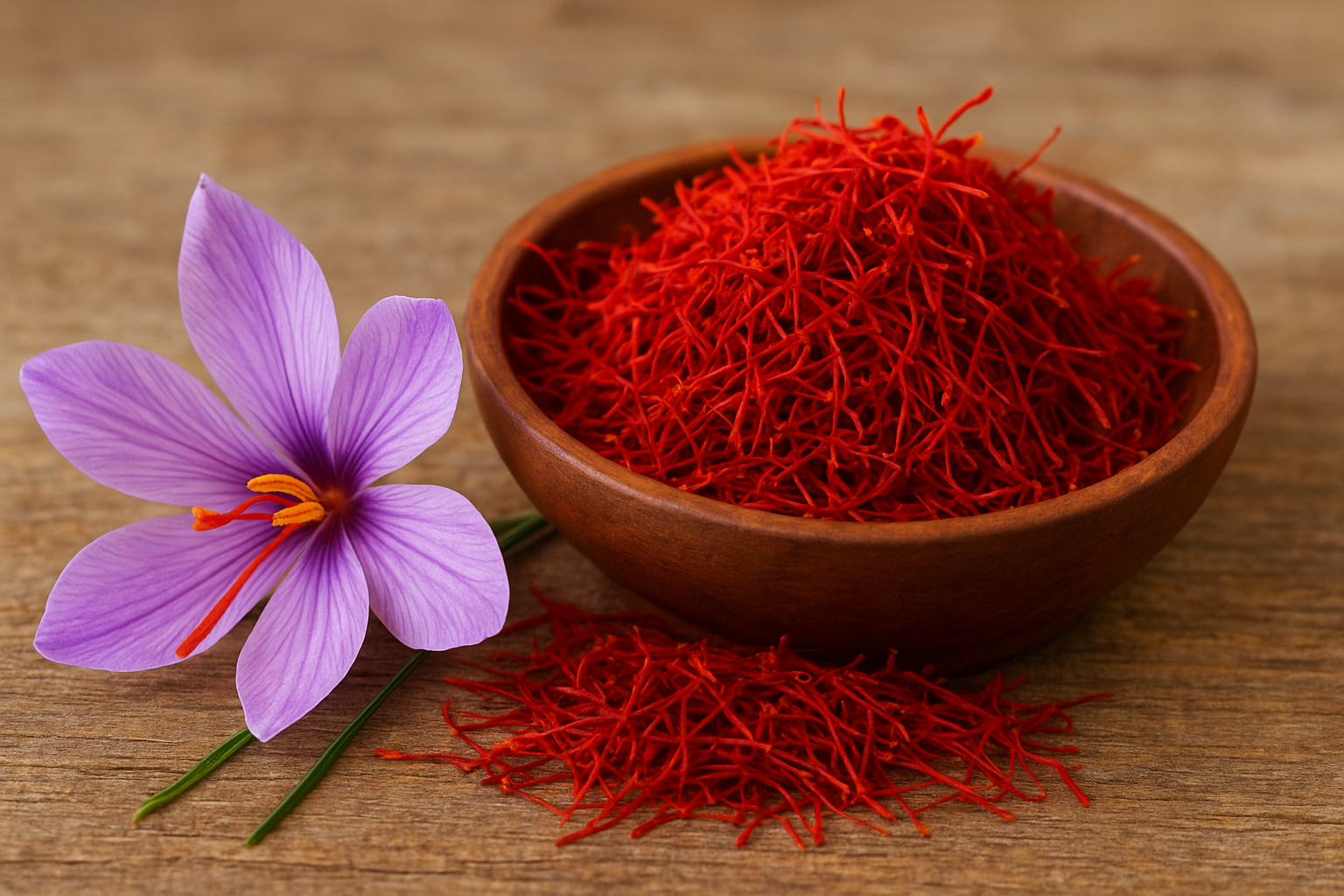
Saffron Cultivation — Methods and Advances
Introduction
Saffron is one of the most valuable spices in the world, derived from the stigmas of the flower of Crocus sativus. Because of its high value and sensitivity, methods of cultivation and production have been studied to improve yield, quality, and sustainability.
Traditional vs Modern Cultivation Methods
Traditionally, saffron is grown in soil: corms (bulbs) are planted in well‑drained fields, often in arid or semi‑arid regions, with natural cycles of dormancy and flowering. But recent research suggests that soilless and controlled‑environment cultivation can offer advantages — especially where soil quality or climate are limiting.
-
In a controlled soilless setup (e.g. hydroponics / fertigation), saffron corms showed improved growth, biomass accumulation, and sometimes higher yield compared to soil‑based cultivation.
-
One study found that using a nutrient solution enriched with potassium (K) in fertigation produced corms and saffron threads that met the highest quality standards.
Factors That Affect Yield and Quality
Multiple factors influence the success of saffron cultivation:
-
Bulb size and planting density/depth — Larger mother corms and appropriate spacing help maximize flower and stigma production.
-
Growing medium / soil type — In pot culture, substrates like peat‑moss + sand/foam performed better than heavy loamy soil: heavy soil caused stress and reduced growth.
-
Cultivation mode (soil vs soilless) and resource management — Soilless cultivation and modern fertigation/irrigation systems help when conventional soil‑based farming is constrained (poor soil, water scarcity, climate issues).
Advances: Tissue Culture, Rapid Propagation, and Post‑Harvest Management
Beyond field cultivation, recent studies look at advanced methods:
-
In vitro micropropagation and micro‑corm induction — Using plant growth regulators (e.g. NAA, BAP) and elicitors (e.g. salicylic acid), researchers have optimized tissue‑culture protocols to produce healthy saffron corms under controlled conditions. This could help produce disease‑free planting material and faster propagation.
-
Breeding, fertilization, and post‑harvest management research — Studies surveyed improvements in fertilization, disease control, flowering regulation, genetic breeding, and optimized harvesting/storage — all to improve yield, quality, and economic viability of saffron cultivation.
Why Modern Methods Matter
Because saffron cultivation traditionally is labour‑intensive, sensitive to soil and climate, and low‑yield per corm, modern cultivation techniques can:
-
Increase yield per area or per corm (through better propagation or soilless methods)
-
Reduce dependency on ideal soil or climate — making cultivation possible in non‑traditional regions or under changing climate conditions
-
Produce more uniform, high‑quality saffron by controlling growth conditions, corm health, fertilization, and post‑harvest processing
These improvements make saffron cultivation more sustainable and scalable, and help adapt to global challenges like soil degradation or climate change.
Selected References
-
Vlahova V. “Saffron (Crocus sativus) as an Alternative Crop in Sustainable Agricultural Systems.” Scientific Papers Series Management, Economic Engineering in Agriculture and Rural Development (2022). managementjournal.usamv.ro
-
Zhou Lin, Yang Liuyan, Li Qingzhu et al. “Cultivation, Breeding and Post-harvest Management of Crocus sativus: Recent Progress.” China Agricultural Science Bulletin, 2020. casb.org.cn
-
Mollafilabi A. “A Comparative Study of a New Method of Saffron Cultivation with a Traditional Method for Improving Saffron Productivity.” Proceedings of ISHS Acta Horticulturae 850. actahort.org
-
“Improvement in Productivity and Quality of Soilless Saffron Crops by Implementing Fertigation.” Plants (MDPI), 2023. MDPI
-
Majid Maliqa, Junaid N. Khan, Haleema Bano et al. “Study of the Phenology of Saffron (Crocus sativus L.) Grown in Soilless Media under Protected Environment.” International Journal of Environment and Climate Change, 2023.